Bread Things
@Bread_Things_Official
Bread Things is about real ingredients and simple bread you can make at home. We promote intuitive, traditional methods that avoid preservatives and honor bread’s long human history.
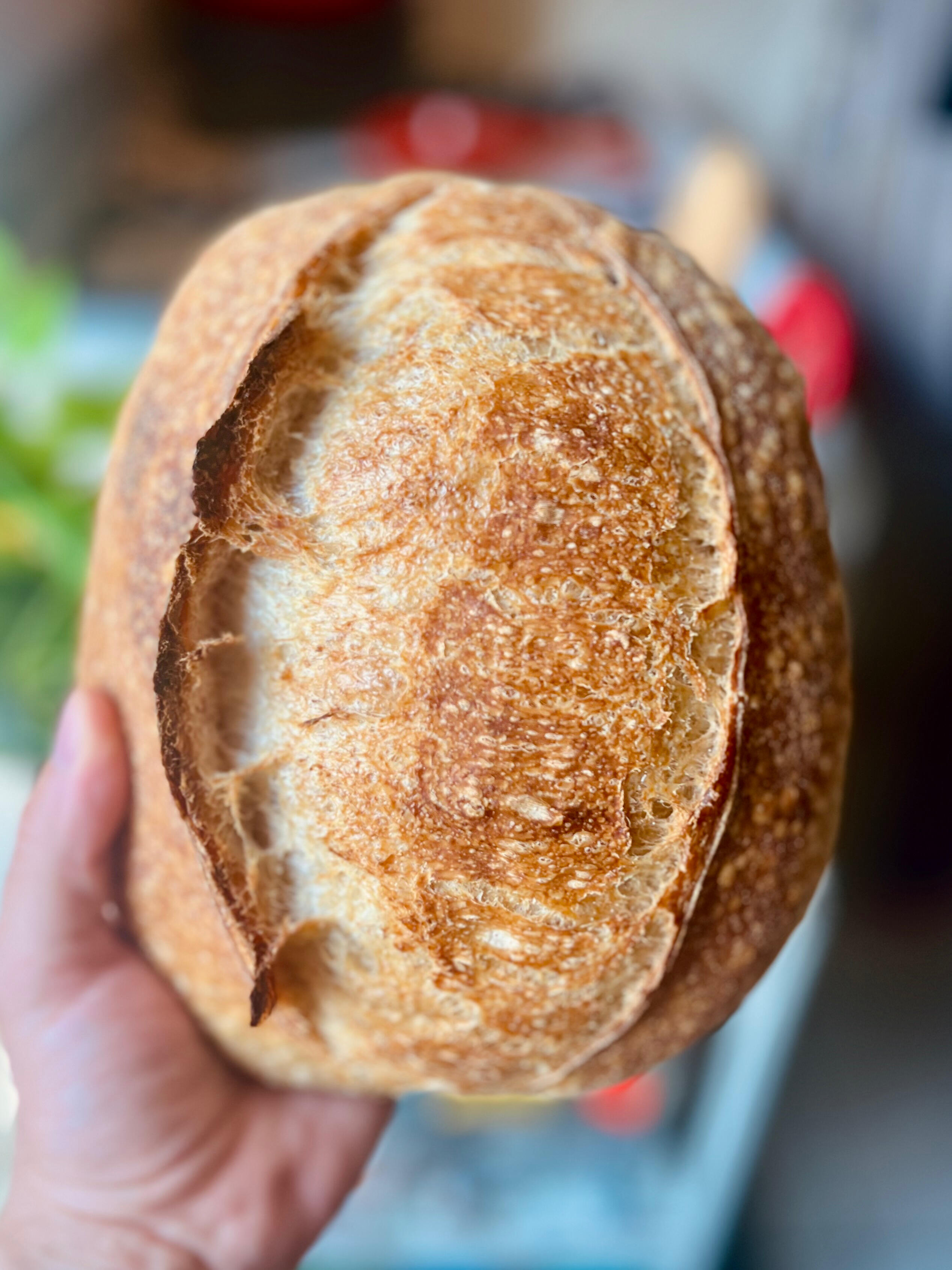
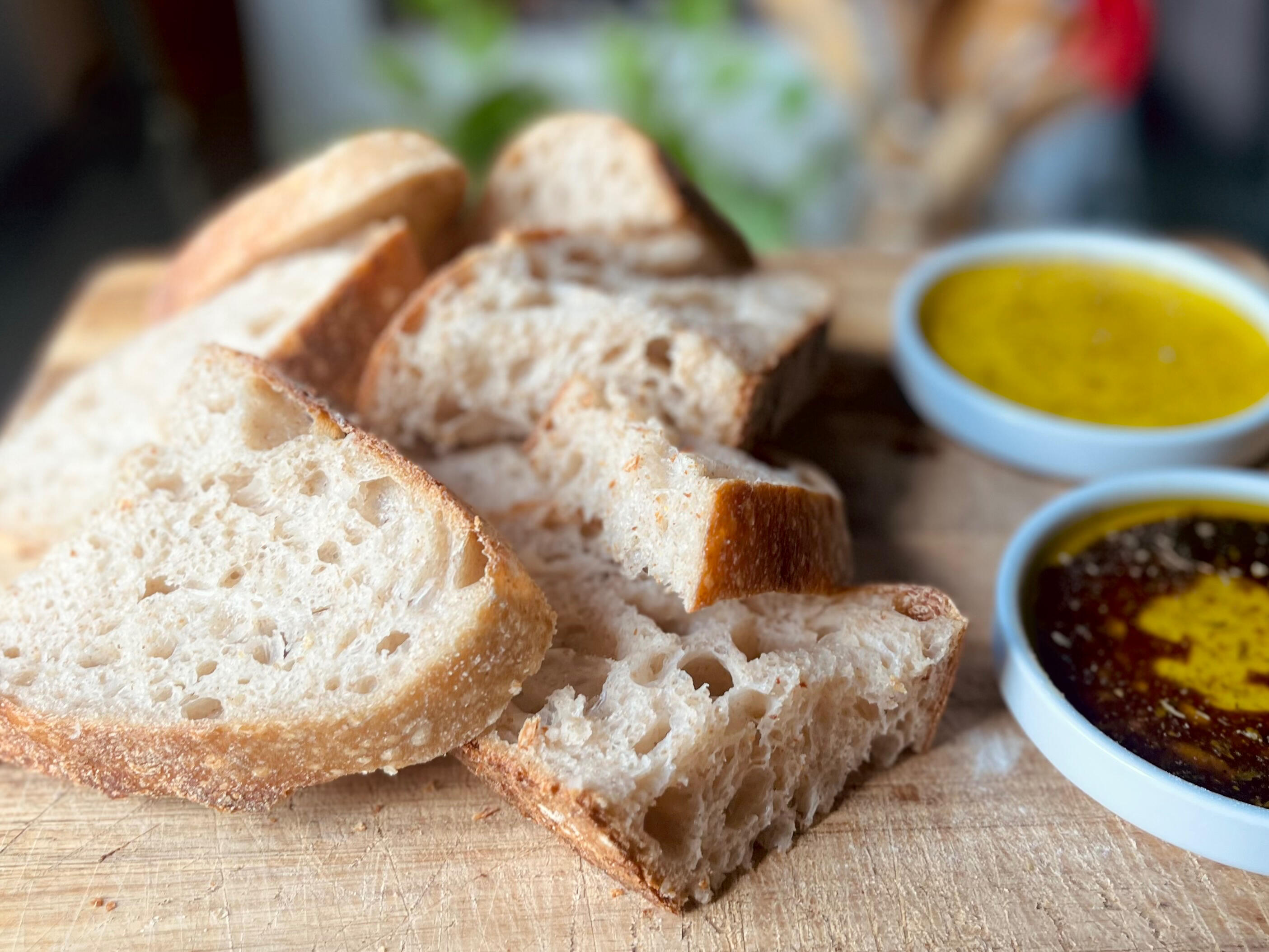
Who we are
Bread Things is built on the belief that real bread comes from real ingredients and simple, honest processes—ones that can be learned, felt, and recreated at home.Bread has been part of the human story for thousands of years, long before modern industry and long before food labels needed explaining. Early humans discovered that grain could be ground, mixed with water, and cooked into nourishment. Bread was never meant to be confusing. It was meant to sustain.Today, when people talk about gluten sensitivity or intolerance, we believe the conversation often misses the larger issue: how bread is made now. Modern industrial loaves rely on shortcuts, preservatives, and speed—methods designed to maximize shelf life and profit. The problem isn’t bread itself. It’s the system that produces it.My own relationship with bread started simply. Growing up, my dad would bring home whatever loaf was left over at his store, and I ate it with just about everything. That love eventually led me to bake for myself.From there, I found sourdough and began to understand its deeper value: slower fermentation, improved digestion, and a process that works with the body instead of against it. The contrast between real bread and supermarket bread became impossible to ignore. One is shaped by time, care, and tradition. The other by efficiency and scale.Bread helped build civilizations. It fed families, sustained communities, and laid the groundwork for cities and economies. It deserves more than to be stripped down for convenience.Bread Things exists to bring bread back to its roots—simple, nourishing, and human. Real bread, made the right way.
Recipes
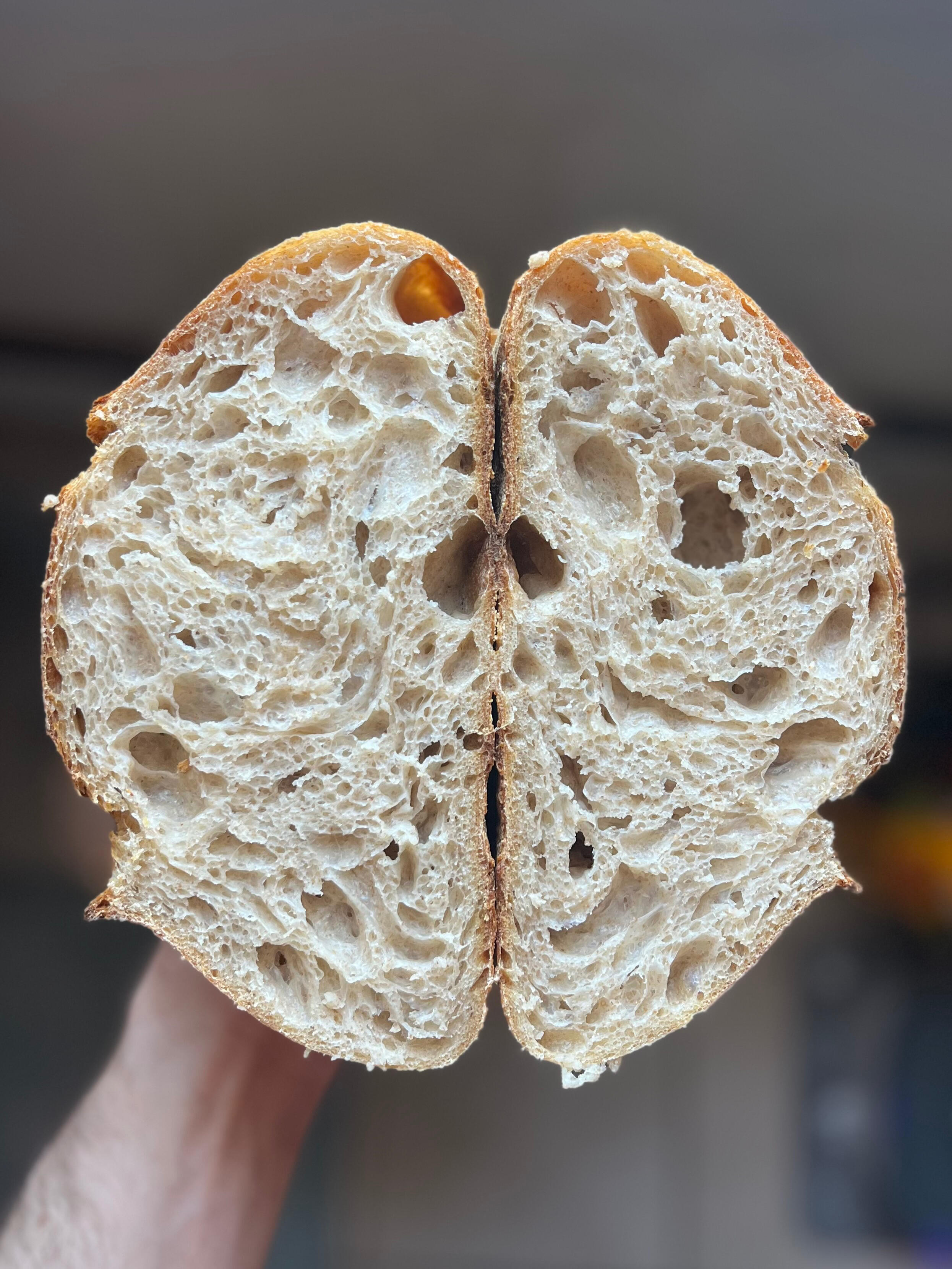
Cranberry Walnut Sourdough
A naturally leavened loaf with a balanced crumb, gentle acidity, and just enough sweetness from dried cranberries and toasted walnuts. This dough is mixed by hand and strengthened gradually through folds, allowing time and fermentation to do the work. Makes two loaves.Ingredients
Levain (starter)
-16g active sourdough starter
-40g bread flour
-40g rye flour
-80g waterDough
-720g bread flour
-40g rye flour
-40g flour blend
-560g water
-160g levain (starter)
-16g saltInclusions
-112g dried cranberries, soaked and drained
-128g walnuts, roughly choppedMethod
1. Starter Prep — 8:00pm (Night Before)
In a small container, mix: 16g active sourdough starter, 40g bread flour, 40g rye flour, and 80g water. Stir until fully combined. Cover loosely and leave at room temperature for 12 hours. The levain should be bubbly, expanded, and aromatic by morning.2. Autolyse and Inclusion Prep— 8:00am
In a large bowl, combine all flours and water. Mix until no dry flour remains. The dough will look shaggy and rough. Cover and rest for 30 minutes.Soak the Cranberries
Place dried cranberries in warm water and let soak. Drain well before adding to the dough.Toast the Walnuts
Spread walnuts on a baking sheet and toast at 175°F for 8 minutes, until lightly fragrant. Allow to cool completely before adding.3. Final Mix — 8:30am
Add the sourdough starter and salt to the dough. Mix by hand until fully incorporated and the dough begins to smooth out. Expect the dough to feel elastic but slightly sticky. Cover and rest for 1 hour.4. Add Inclusions + Fold — 9:30am
Scatter the soaked cranberries and chopped walnuts over the surface. Fold the dough over itself until the inclusions are evenly distributed. Handle gently to avoid tearing the dough.5. Folds
Perform two additional sets of coil folds, spaced 1 hour apart (10:30am and 11:30am). With each fold, the dough should feel stronger, smoother, and more cohesive.6. Bulk Fermentation
Allow the dough to continue fermenting at room temperature until it shows clear signs of readiness:-Increased in volume
-Bubbles visible on the surface and along the sides
-Dough feels airy and elastic
-Dough gently jiggles when the bowl is shakenNote that timing will vary depending on room temperature and starter activity.7. Pre-Shape — 2:30pm
Turn the dough out onto a lightly floured surface. Divide into two equal pieces. Gently pre-shape into two rounds, taking care not to deflate the dough. Rest uncovered for 30 minutes.8. Final Shape — 3:00pm
Shape the dough into its final form and place seam-side up into a floured proofing basket.9. Cold Proof — 3:30pm
Transfer the basket to the refrigerator and cold proof overnight.Baking (Next Day)
10. Preheat — 8:00am
Preheat oven and covered Dutch oven to 475°F for 30 minutes.11. Bake
Remove dough from refrigerator. Turn out onto parchment, score, and carefully place into the hot Dutch oven. Immediately reduce oven temp to 425°F. Bake covered for 25 minutes.Remove lid, reduce oven to 400°F, and bake 20 minutes uncovered. The loaf is finished when the crust is deeply golden and firm.Repeat this process for second loaf.12. Cool
Allow bread to cool for at least 1 hour before slicing.
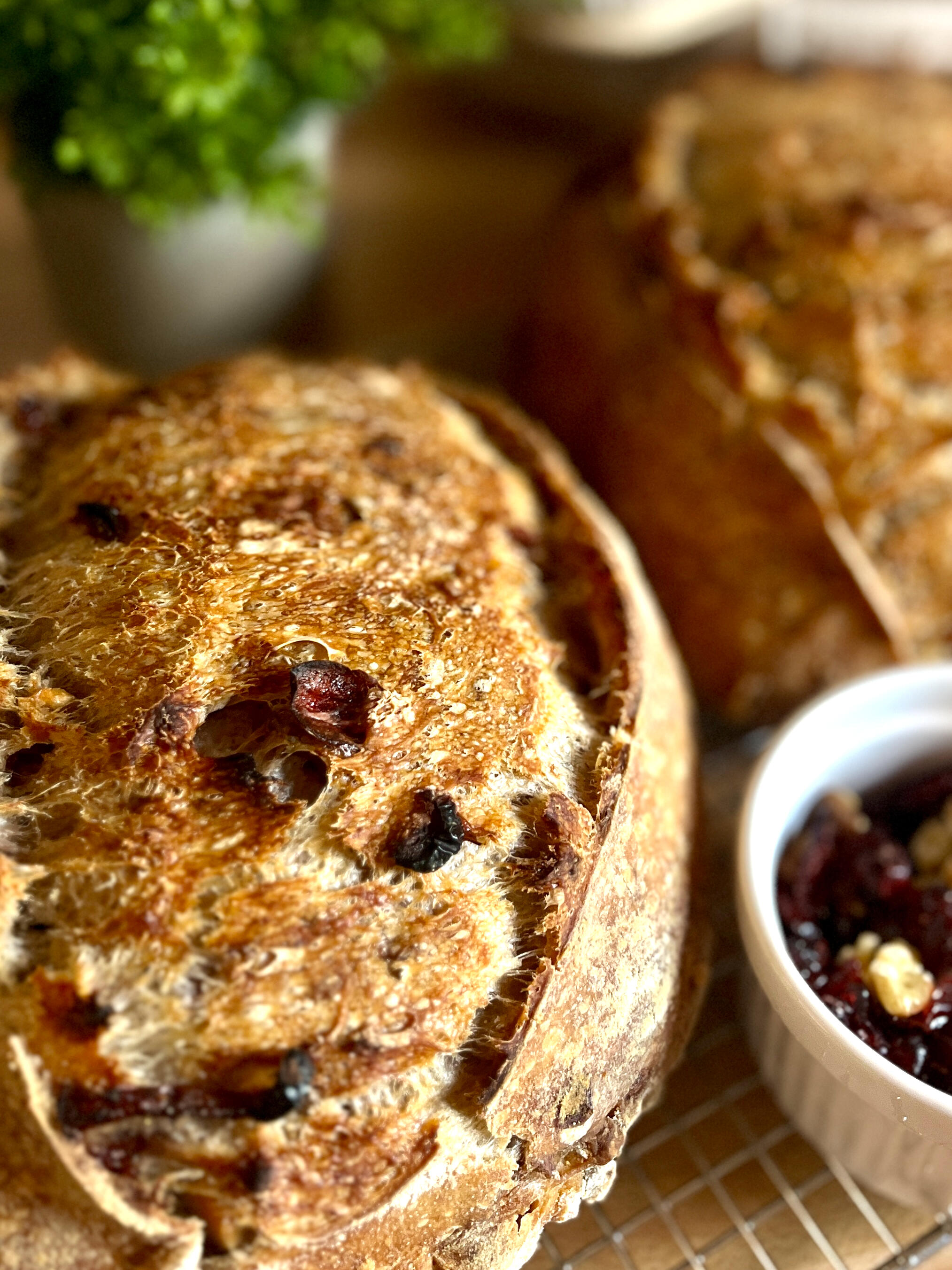
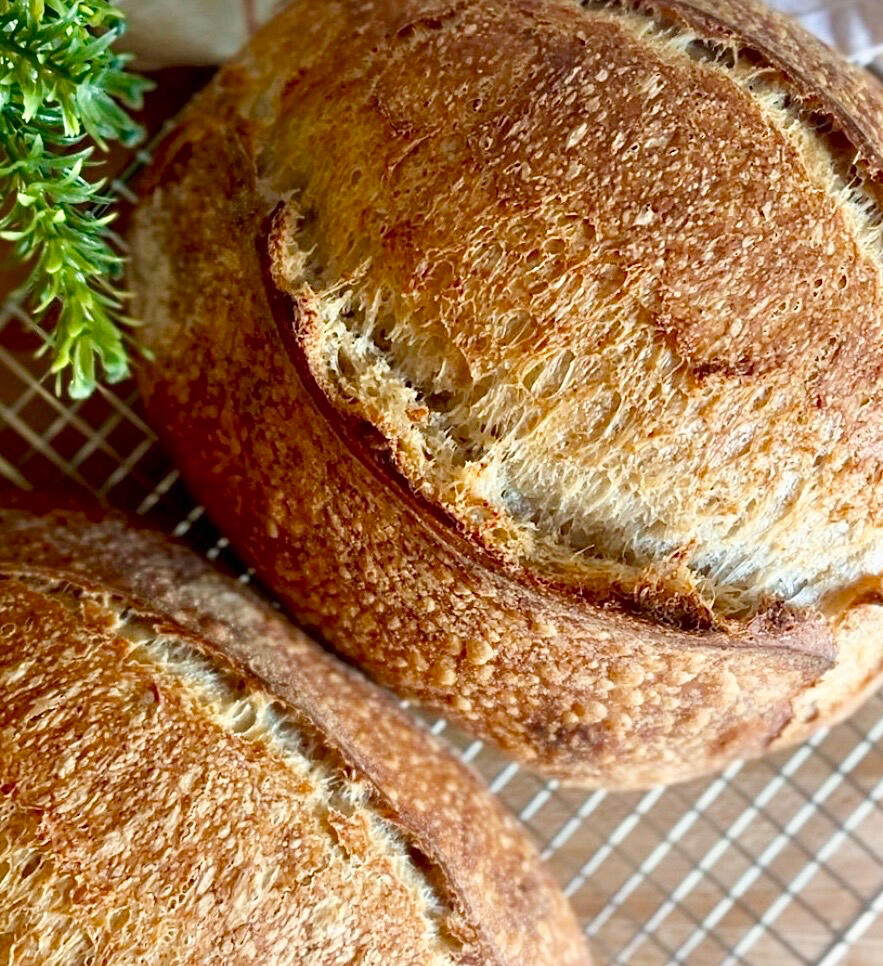
10% Whole Wheat Country Loaf
A country loaf, what most think of when they hear “sourdough bread”, features a chewy golden crust, airy open crumb, and deep, complex flavor. It is made with a blend of white and whole wheat flours and naturally leavened, it’s slow-fermented for that signature taste.Ingredients
Levain (starter)
-16g active sourdough starter
-40g bread flour
-40g whole wheat flour
-80g waterDough
-720g bread flour
-80g whole wheat flour
-560g water
-160g levain (starter)
-16g saltMethod
1. Starter Prep — 8:00pm (Night Before)
In a small container, mix: 16g active sourdough starter, 40g bread flour, 40g whole wheat flour, and 80g water. Stir until fully combined. Cover loosely and leave at room temperature for 12 hours. The levain should be bubbly, expanded, and aromatic by morning.2. Autolyse — 8:00am
In a large bowl, combine all flours and water. Mix until no dry flour remains. The dough will look shaggy and rough. Cover and rest for 30 minutes.3. Final Mix — 8:30am
Add the sourdough starter and salt to the dough. Mix by hand until fully incorporated and the dough begins to smooth out. Expect the dough to feel elastic but slightly sticky. Cover and rest for 1 hour.4. Fold — 9:30am
Fold the dough over itself. Handle gently to avoid tearing the dough.5. Folds
Perform two additional sets of coil folds, spaced 1 hour apart (10:30am and 11:30am). With each fold, the dough should feel stronger, smoother, and more cohesive.6. Bulk Fermentation
Allow the dough to continue fermenting at room temperature until it shows clear signs of readiness:-Increased in volume
-Bubbles visible on the surface and along the sides
-Dough feels airy and elastic
-Dough gently jiggles when the bowl is shakenNote that timing will vary depending on room temperature and starter activity.7. Pre-Shape — 2:30pm
Turn the dough out onto a lightly floured surface. Divide into two equal pieces. Gently pre-shape into two rounds, taking care not to deflate the dough. Rest uncovered for 30 minutes.8. Final Shape — 3:00pm
Shape the dough into its final form and place seam-side up into a floured proofing basket.9. Cold Proof — 3:30pm
Transfer the basket to the refrigerator and cold proof overnight.Baking (Next Day)
10. Preheat — 8:00am
Preheat oven and covered Dutch oven to 475°F for 30 minutes.11. Bake
Remove dough from refrigerator. Turn out onto parchment, score, and carefully place into the hot Dutch oven. Immediately reduce oven temp to 425°F. Bake covered for 25 minutes.Remove lid, reduce oven to 400°F, and bake 20 minutes uncovered. The loaf is finished when the crust is deeply golden and firm.Repeat this process for second loaf.12. Cool
Allow bread to cool for at least 1 hour before slicing.